

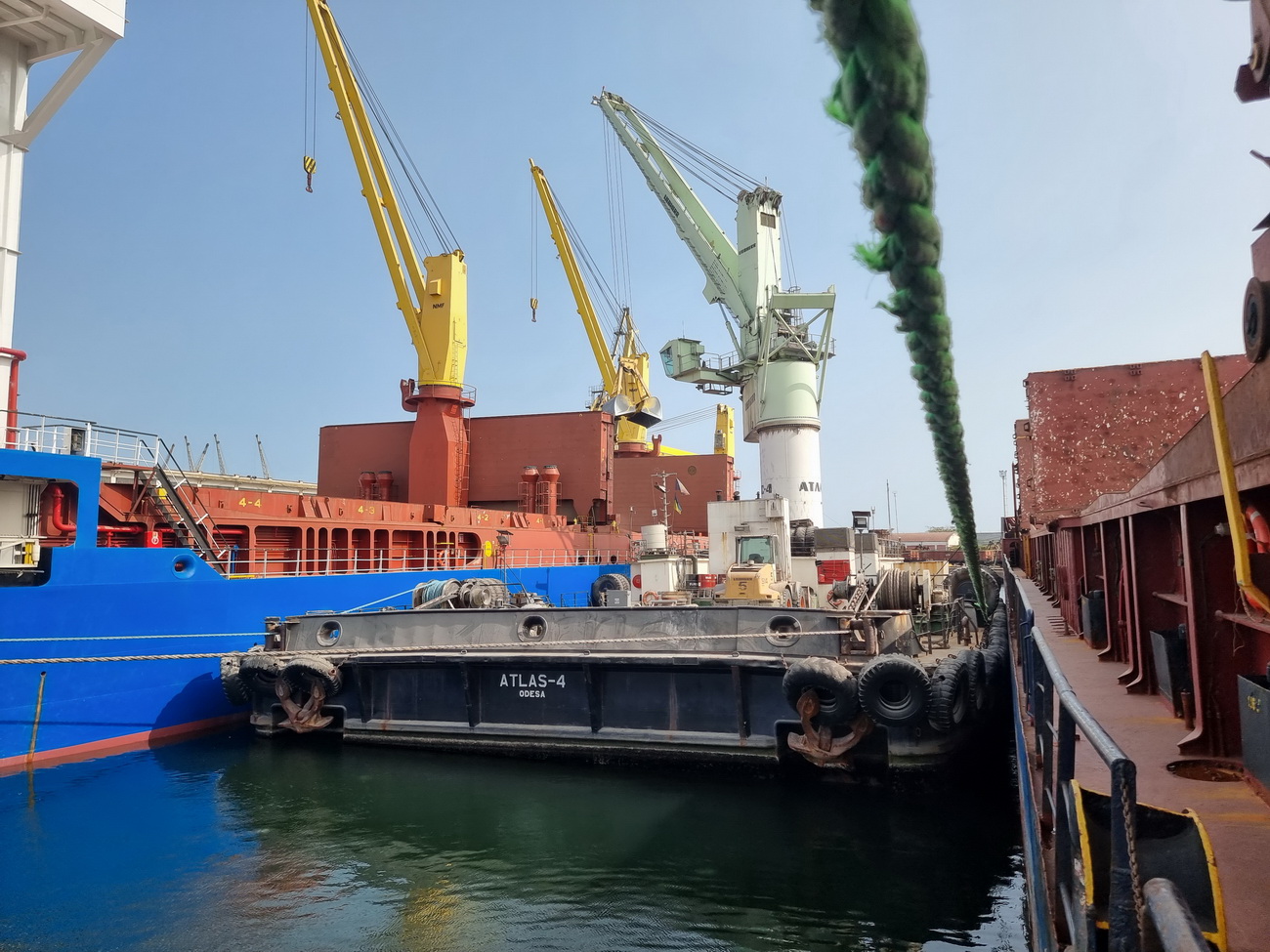
Kiev Shipping Ltd has provided ship chartering and maritime brokerage services since 2000, working with cargo owners, traders, operators and other participants in the international freight market.
With 25+ years of experience, Kiev Shipping Ltd focuses on dry bulk cargo, breakbulk cargo and project cargo chartering. The company acts as an independent shipbroker and does not own vessels.
Dry Bulk Cargo Chartering
Dry bulk cargoes may include:
- wheat;
- corn;
- barley;
- other grain cargoes;
- fertilizers;
- urea;
- potash;
- coal;
- ores;
- cement;
- clinker;
- gypsum;
- salt;
- other bulk commodities.
Each cargo should be evaluated individually because vessel selection depends on cargo quantity, stowage factor, route, port restrictions and current freight market conditions.
Cargo Information
Before approaching the freight market, cargo interests should prepare complete and accurate information.
A typical dry bulk chartering enquiry should include:
- exact cargo description;
- total quantity;
- stowage factor, where available;
- loading port;
- discharging port;
- laycan;
- loading rate;
- discharging rate;
- draft restrictions;
- terminal restrictions;
- any special cargo requirements.
Accurate information allows shipowners and brokers to evaluate the shipment more efficiently and provide more realistic freight indications.
Vessel Selection
An available vessel is not necessarily the most suitable vessel for a particular dry bulk cargo.
Important factors may include:
- vessel deadweight;
- cubic capacity;
- hold capacity;
- vessel draft;
- hatch dimensions;
- cargo characteristics;
- port restrictions;
- loading and discharging capabilities.
The relationship between cargo quantity and vessel size is particularly important.
A vessel that is too large may create unnecessary freight costs or draft problems, while a vessel that is too small may be unable to lift the required quantity.
Stowage Factor and Cubic Capacity
Stowage factor affects how much space a cargo occupies inside the vessel’s holds.
Two cargoes with the same weight may require different cubic capacities.
For this reason, vessel deadweight alone is not enough to determine suitability.
The broker and shipowner should also consider the vessel’s hold capacity and the physical characteristics of the cargo before fixing.
Port Restrictions
Loading and discharging ports may directly determine which vessels can be used.
Typical restrictions may include:
- maximum draft;
- berth length;
- vessel beam;
- air draft;
- tidal limitations;
- terminal equipment;
- loading restrictions;
- discharging restrictions;
- local navigation requirements.
These factors should be checked before final fixture negotiations.
Freight Factors
Dry bulk freight rates are influenced by current market conditions and should not be treated as fixed tariffs.
Important factors may include:
- vessel position;
- cargo quantity;
- vessel size;
- route;
- laycan;
- bunker prices;
- port costs;
- canal costs;
- loading and discharging rates;
- seasonal cargo flows;
- congestion;
- availability of suitable tonnage.
A freight indication therefore reflects a specific cargo requirement and a particular market situation.
Commercial Terms
The freight rate is only one element of the chartering decision.
Other important terms may include:
- laytime;
- demurrage;
- despatch;
- loading responsibilities;
- discharging responsibilities;
- freight payment;
- notices;
- cargo documentation;
- charter-party conditions.
These terms should be clearly agreed before the fixture is concluded.
The Role of the Shipbroker
Kiev Shipping Ltd acts as an independent shipbroker between cargo interests and the international freight market.
The company assists with:
- searching for suitable tonnage;
- obtaining freight indications;
- comparing vessel alternatives;
- negotiating freight;
- negotiating commercial terms;
- coordinating fixture negotiations;
- charter-party coordination;
- commercial voyage follow-up.
The broker’s role is to help match the cargo requirement with suitable tonnage and commercially workable transportation terms.
More information about dry bulk cargo chartering is available on the dedicated Kiev Shipping service page.